

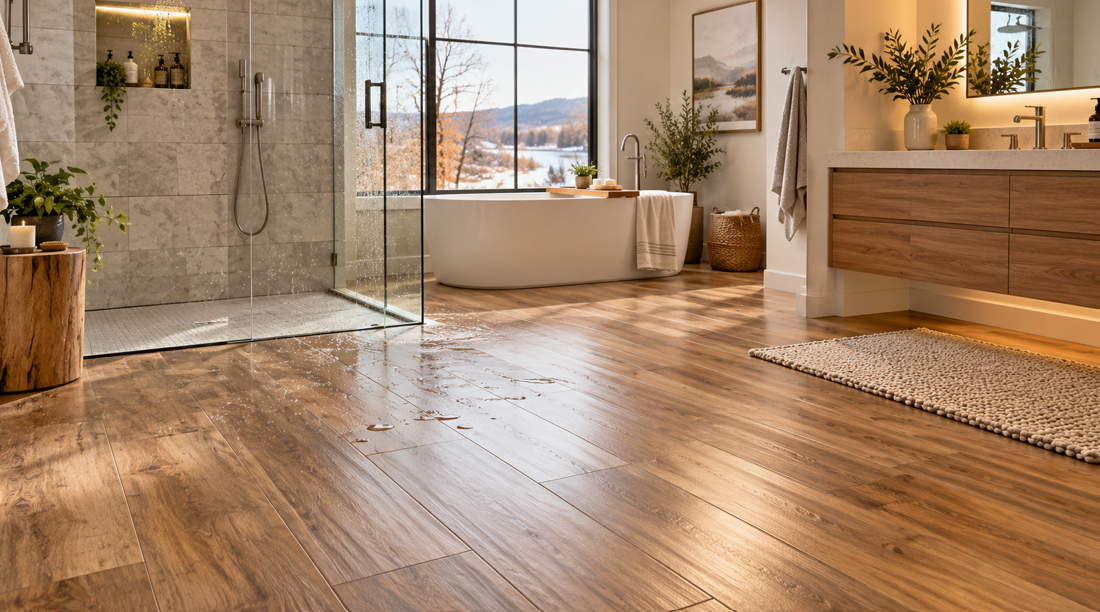
Rooms exposed to moisture need flooring that combines style with practical everyday performance. In Easton homes, that often includes bathrooms, laundry rooms, mudrooms, powder rooms, and other spaces where splashes, damp shoes, wet towels, and changing humidity are part of daily life.
Laminate flooring can be a strong option for some of these spaces when the right product is selected. Modern water-resistant and waterproof-rated laminate products offer realistic wood visuals, durable surfaces, and easier maintenance than many homeowners may expect.
However, there is an important distinction to make from the beginning: not every laminate floor is suitable for every wet environment. Traditional laminate can be damaged by prolonged moisture exposure, and areas such as shower floors or fully waterproof wet rooms may require a different flooring system entirely.
The goal is to choose flooring based on the room, moisture exposure, and manufacturer's specifications rather than assuming all laminate performs the same way.
Homeowners throughout Easton and the surrounding Lehigh Valley can turn to Design Floors Lehigh Valley for knowledgeable flooring guidance backed by more than 30 years of experience.
This guide explains where laminate can work well in moisture-prone rooms, what features to look for, and how to protect the floor once it's installed.
What Does "Wet Room" Mean in a Home?
The term "wet room" can mean different things depending on how a space is designed.
In some homes, a wet room refers specifically to a bathroom where the shower area is integrated directly into the floor and water can reach much of the room.
In everyday flooring conversations, homeowners may also use the term more broadly for rooms where moisture is common.
These can include:
Bathrooms
Powder rooms
Laundry rooms
Mudrooms
Utility rooms
Entryways
Kitchens
Basement spaces
These rooms don't all experience moisture in the same way.
A powder room may only see occasional splashes around the sink, while a laundry room could experience small leaks or water around appliances. A true open-shower wet room may have direct and repeated water exposure across the floor.
That difference matters.
Laminate that performs well in a powder room isn't automatically appropriate for an open shower environment.
The manufacturer's installation and moisture guidelines always need to match the room where the flooring will be used.
Why Modern Laminate Works Better Around Moisture
Laminate flooring has evolved considerably.
Older laminate products were often much more vulnerable to moisture reaching the core. Once enough water entered through plank edges, swelling or distortion could occur.
Many modern products are designed with improved moisture protection.
Water-Resistant Surface Technology
A durable wear layer protects the decorative surface of laminate.
Some modern flooring systems also include enhanced edge treatments and tighter locking systems designed to reduce the amount of moisture that reaches the core.
These features can make them better suited to rooms where occasional spills and splashes happen.
Improved Locking Systems
The joints between planks are important because they're potential pathways for water.
Quality click-lock systems create tight connections between boards.
Some laminate collections include additional moisture-resistant technology around these joints to provide better protection from surface spills.
More Durable Core Materials
The core is the structural center of laminate flooring.
Products designed for increased moisture resistance may use denser or treated core materials that perform better than traditional laminate when exposed to limited moisture.
Still, moisture resistance has limits.
A product described as water-resistant may provide protection for a specified period, while waterproof-rated products may offer a different level of performance. Homeowners need to review the individual product specifications rather than relying on the category name alone.
Water-Resistant and Waterproof Laminate Aren't the Same
This distinction is particularly important when selecting flooring for moisture-prone spaces.
Water-Resistant Laminate
Water-resistant laminate is designed to tolerate limited moisture exposure.
It may perform well against:
Small spills
Wet footwear
Occasional splashes
Damp pet paws
Normal bathroom humidity
Spills still benefit from prompt cleanup.
These products may work well in powder rooms, laundry rooms, kitchens, and similar spaces when permitted by the manufacturer.
Waterproof-Rated Laminate
Some manufacturers offer laminate systems marketed with stronger waterproof performance.
These products may include:
Enhanced locking systems
Moisture-protected edges
Specialized core materials
Surface coatings designed to limit water penetration
Even then, "waterproof" does not mean the flooring can automatically be installed anywhere water exists.
Installation requirements, perimeter sealing, room type, and manufacturer warranties can all affect suitability.
True Wet Areas Need Extra Caution
A shower floor or fully integrated wet-room floor experiences direct and repeated water exposure.
These environments typically require flooring assemblies designed specifically for continuous water exposure, including suitable waterproofing beneath the finished surface.
Laminate may not be appropriate for these areas unless the manufacturer explicitly approves the product and installation system for that use.
When in doubt, professional guidance is more useful than choosing based on appearance alone.
Why Laminate Appeals to Easton Homeowners
For suitable moisture-prone rooms, laminate can offer several advantages.
It Creates a Warm Wood-Look Interior
Tile has traditionally been common in bathrooms and utility spaces, but not every homeowner wants a hard tile appearance.
Laminate can bring the visual warmth of wood into rooms where homeowners may not want natural hardwood.
Modern printing and texturing can reproduce:
Oak
Maple
Walnut
Hickory
Reclaimed wood looks
Wide-plank styles
Light contemporary finishes
Darker traditional tones
That variety can help homeowners coordinate flooring with cabinetry, vanities, wall colors, and surrounding rooms.
It Can Create Better Visual Flow
Many Easton homes have connected kitchens, hallways, mudrooms, and living spaces.
Using coordinating flooring across adjoining areas can create a more unified interior.
Laminate offers enough style variety that homeowners can often find a design that works across several rooms.
In open-plan spaces, this can make the home feel larger and more intentional.
It Handles Everyday Surface Wear Well
Laminate is known for its durable wear layer.
That makes it useful in rooms where flooring may encounter:
Frequent footsteps
Shoes
Pet claws
Laundry baskets
Moving chairs
Children's activities
Regular cleaning
Moisture resistance and scratch resistance are separate qualities, but a suitable laminate can provide both practical surface durability and moisture protection.
Where Laminate Can Work Well in Moisture-Prone Rooms
The best applications depend on the individual product.
Powder Rooms
Powder rooms generally experience less direct water than full bathrooms.
There is no shower or bathtub, so moisture exposure usually comes from sink splashes, cleaning, or occasional spills.
Water-resistant laminate can be a practical option when approved for this use.
Laundry Rooms
Laundry rooms benefit from flooring that's durable and easy to clean.
Laminate can create an attractive wood-look surface while standing up well to everyday foot traffic.
However, appliance leaks remain a consideration.
Homeowners may want to use washing machine trays, inspect appliance hoses regularly, and clean any water quickly.
A significant leak can damage many flooring materials and surrounding building components, so flooring alone shouldn't be treated as leak protection.
Mudrooms and Entryways
Easton's wet fall leaves, winter snow, and rainy weather can make mudrooms busy during certain times of year.
Moisture-resistant laminate can work well when combined with practical habits such as:
Quality entry mats
Boot trays
Regular sweeping
Prompt moisture cleanup
Its durable surface also helps in areas where footwear and outdoor debris are common.
Kitchens
Kitchens experience spills, cleaning, and constant activity.
Laminate can provide the look of hardwood while offering a durable surface for busy households.
The specific product still needs to be approved for kitchen use.
Homeowners comparing styles can explore available laminate flooring options while paying close attention to each product's moisture rating and installation requirements.
Why Laminate Can Be Practical for Busy Households
A moisture-prone room is often also a high-traffic room.
Laundry rooms, kitchens, mudrooms, and entryways are rarely decorative spaces that remain untouched.
They're used every day.
Easier Everyday Cleaning
Most laminate floors can be maintained with straightforward routines.
Regular care generally involves:
Sweeping
Vacuuming with an appropriate hard-floor setting
Dry or lightly damp cleaning
Prompt spill removal
Manufacturer-approved cleaning products
Avoid excessive water, even with moisture-resistant products, unless the manufacturer specifically states that the cleaning method is appropriate.
Good Resistance to Everyday Surface Marks
The wear layer can help laminate resist common surface wear.
This can be valuable in households with pets, children, or frequent visitors.
No floor is completely resistant to scratches or impacts, but quality laminate is designed for active residential use.
Consistent Appearance
Natural materials can vary considerably from plank to plank.
Laminate is manufactured, allowing homeowners to achieve a more predictable color and pattern across the floor.
For homeowners who want a clean, coordinated look, this consistency can be a major design advantage.
How Easton's Seasonal Weather Can Affect Moisture Indoors
Pennsylvania's changing seasons mean moisture conditions inside a home can vary throughout the year.
Rainy Periods
Wet footwear and umbrellas can introduce moisture near entrances.
Mudrooms and hallways may need more frequent cleaning during rainy periods.
Entry mats and prompt cleanup can help control water before it travels farther into the home.
Fall Leaves
Wet leaves can stick to shoes and pet paws.
They can bring both moisture and abrasive grit indoors.
Regular sweeping helps prevent debris from being walked repeatedly across the floor.
Winter Snow
Snow brought inside can melt quickly.
Boot trays and absorbent mats are particularly helpful during colder months.
Homeowners also need to be aware of road salt or deicing residue, which can be tracked indoors.
Summer Humidity
Higher humidity can affect indoor comfort and building materials.
Climate control can help maintain more stable interior conditions.
While laminate is manufactured rather than solid wood, the flooring system and surrounding building materials still benefit from appropriate indoor environmental conditions.
Look Beyond the Surface When Choosing Laminate
It is easy to choose flooring based on color alone.
For moisture-prone rooms, technical performance deserves equal attention.
Check the Moisture Rating
Find out whether the product is:
Standard laminate
Water-resistant laminate
Waterproof-rated laminate
Then review what that description actually means according to the manufacturer.
Confirm Approved Rooms
Product instructions may clearly state where the flooring can and cannot be installed.
This is more reliable than assuming a product is suitable because it is described as moisture-resistant.
Review Installation Requirements
Some moisture warranties depend on specific installation procedures.
These may include:
Perimeter sealing
Approved underlayment
Correct expansion gaps
Specific transition details
Manufacturer-approved adhesives or sealants
Ignoring these requirements could affect both performance and warranty coverage.
Consider the AC Rating
Laminate may also carry an abrasion class, or AC, rating.
This helps indicate how much traffic and surface wear the flooring is designed to handle.
For active household spaces, a suitable residential wear rating can be an important consideration alongside water resistance.
Professional Installation Matters More in Moisture-Prone Rooms
Even a high-quality product can perform poorly if it isn't installed correctly.
Subfloor Preparation
The subfloor needs to be clean, level, stable, and appropriate for the flooring system.
Moisture conditions may also need to be assessed before installation.
Expansion Space
Laminate flooring often requires expansion space around the room perimeter.
This allows the floor to respond to environmental changes without being restricted by walls or fixed objects.
Proper Perimeter Sealing
Certain moisture-resistant systems require specific sealing around room edges, plumbing penetrations, or transitions.
The correct method depends entirely on the product.
Care Around Fixtures
Bathrooms and utility rooms may include toilets, vanities, pipes, appliances, and drains.
These details need careful planning so water doesn't have easy pathways beneath the flooring.
Professional installation can help ensure the floor is fitted according to manufacturer requirements rather than relying on a one-size-fits-all approach.
Everyday Habits That Help Protect Laminate
Selecting a moisture-resistant floor is only part of the solution.
Everyday habits still matter.
Clean Spills Promptly
Even waterproof-rated products benefit from sensible moisture management.
Wipe spills rather than allowing water to sit unnecessarily.
Use Mats in Strategic Areas
Place suitable mats:
Near exterior doors
Outside bathtubs
Near sinks
Around laundry areas
Beneath pet water bowls
Make sure the backing is safe for the flooring.
Inspect Appliances
Check hoses and connections on washing machines and other water-using appliances periodically.
Flooring is not a substitute for preventing leaks.
Avoid Excessive Wet Mopping
More water doesn't necessarily mean a cleaner floor.
Use the cleaning method recommended by the laminate manufacturer.
Protect Plank Edges
Repeated water exposure around seams can increase risk with some products.
Prompt cleanup can reduce that exposure.
When Laminate May Not Be the Right Choice
A useful flooring guide needs to explain where the material may not be appropriate.
Laminate may not be the best option when:
The floor will receive continuous direct water.
The room includes an open shower covering the main floor area.
A floor drain is part of the wet-room design.
The product manufacturer excludes the intended room.
Standing water is likely to occur frequently.
The required waterproofing system isn't compatible with laminate.
Tile and other specifically waterproof flooring systems may be better suited to these environments.
The decision needs to be based on the actual room rather than the word "wet room."
A powder room with occasional sink splashes is very different from a fully waterproof bathroom designed for water to flow directly across the floor.
Questions to Ask Before Choosing Laminate for a Wet Area
Before selecting a product, ask:
How much water will realistically reach the floor?
Does the room have a shower or bathtub?
Could standing water occur?
Is the product approved for bathrooms or laundry rooms?
Is the floor water-resistant or waterproof-rated?
How long can spills remain before cleanup is required?
Does the installation require perimeter sealing?
What underlayment is recommended?
Does the moisture warranty have specific conditions?
How will the room be cleaned?
Is professional installation recommended?
Would another flooring material suit the room better?
These questions help separate appearance from actual suitability.
A beautiful product is only a good choice when it can perform in the environment where it will be installed.
Get the Wood Look Without Ignoring Practicality
Laminate can be an excellent option for many moisture-prone rooms in Easton because it combines realistic wood styling with durable everyday performance.
Modern water-resistant and waterproof-rated laminate products can work particularly well in powder rooms, laundry rooms, mudrooms, kitchens, and other spaces where occasional spills or damp conditions are expected.
The key is choosing the right product.
Not every laminate is suitable for wet areas, and truly water-intensive spaces such as open-shower wet rooms may require a different flooring system.
Homeowners can make a more confident decision by checking moisture ratings, approved applications, installation requirements, wear ratings, and maintenance guidance before purchasing.
With more than 30 years of flooring experience, Design Floors Lehigh Valley helps Easton homeowners compare flooring products, understand practical performance requirements, and select styles that fit their homes.
For personalized help choosing laminate for a bathroom, laundry room, mudroom, kitchen, or another moisture-prone space, get in touch with the Design Floors Lehigh Valley team.


