

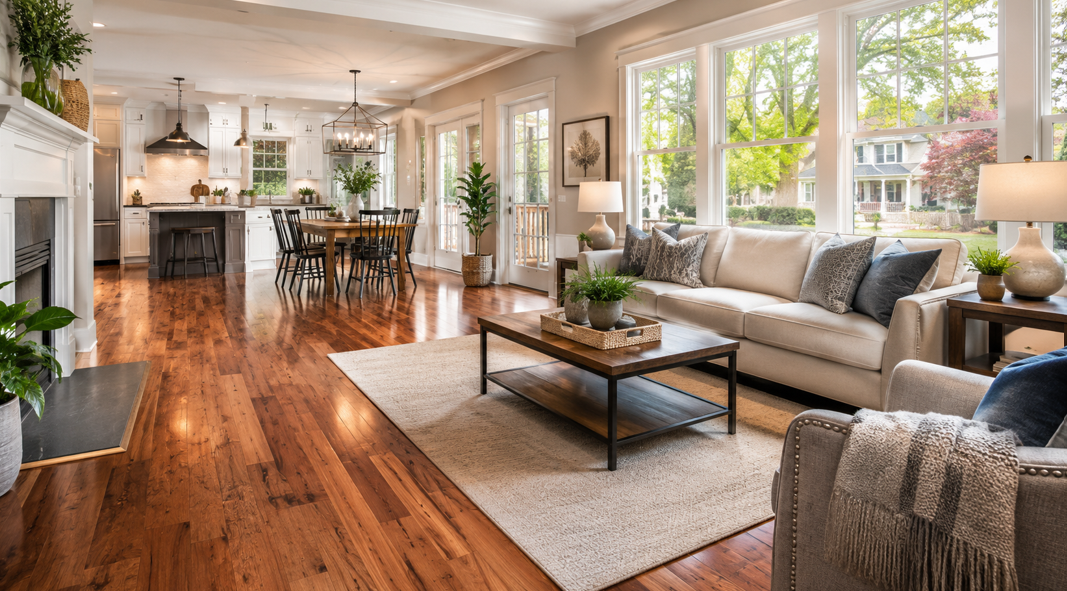
Flooring changes more than the look of a room. It affects how a home feels underfoot, how spaces connect visually, how much upkeep fits into daily life, and how finished the property feels as a whole. That is why homeowners in Allentown often look beyond the first price tag when comparing flooring options.
Hardwood stands out because its value is not limited to appearance. A well-chosen wood floor can bring warmth and character to a home, perform for years with appropriate care, and in many cases be renewed instead of immediately replaced when the surface shows wear. It can also appeal to future buyers who appreciate natural materials and a polished interior.
That long-term perspective matters locally. Zillow reported a typical Allentown home value of $320,863 as of June 30, 2026, up 3.7% year over year, with homes going pending in around seven days. Those figures do not mean hardwood causes home values to rise, but they do show why owners may be thinking carefully about improvements that serve them now and still make sense later.
At Design Floors Lehigh Valley, homeowners can compare flooring choices with their space, lifestyle, and long-term plans in mind. The smartest investment is not simply the most expensive material. It is the floor that suits the home, is installed correctly, and continues to deliver value after the project is finished.
Hardwood Can Strengthen a Home’s Lasting Appeal
One reason hardwood has stayed popular through changing design cycles is simple: real wood brings natural variation into a room. Grain, tone, texture, and plank character give homeowners a foundation that can work with many decorating styles.
A 2026 flooring report highlighted by Better Homes & Gardens found that 61% of Americans surveyed valued wood flooring in home purchases or remodels. The same coverage pointed to easy maintenance, restoration, natural character, and warmer wood tones as important preferences.
A Timeless Look Gives You More Design Flexibility
A hardwood floor can work with many interiors because the surrounding room can change without forcing the floor to change with it. You can repaint walls, replace furniture, update lighting, or move toward a more modern look while keeping the same flooring as a visual foundation.
That does not mean every hardwood style is timeless. Very specific stains, dramatic finishes, or trend-driven layouts may appeal more strongly to some homeowners than others. If resale is part of your plan, a balanced color and finish can create broader appeal. If you expect to stay for years, personal preference can carry more weight.
Strong First Impressions Matter
Buyers notice floors quickly because flooring covers so much visible space. Clean, well-maintained hardwood can make rooms feel finished, connected, and cared for. It may also reduce the feeling that a buyer will need to tackle another major project soon after moving in.
Hardwood does not guarantee a higher sale price, and it cannot compensate for every other issue in a property. Its contribution is more practical: it can strengthen the overall presentation of a home and support a sense of quality.
Consistency Helps Rooms Feel Connected
Using compatible hardwood across adjoining living areas can create smoother visual flow. A hallway, dining area, living room, or other suitable space can feel like part of one intentional design rather than a collection of unrelated rooms.
That kind of continuity may not come with a dollar figure, but it is part of the everyday and perceived value homeowners often appreciate.
Durability Can Turn Upfront Cost Into Long-Term Value
The purchase price of flooring is only one part of the cost. A better question is: how much useful life and enjoyment are you getting from the floor over time?
Quality hardwood can perform for many years when the product fits the room, the installation is sound, and the floor receives sensible care. The National Wood Flooring Association says proper maintenance helps wood floors perform well over their lifetime and protects the homeowner’s investment.
Hardwood Is Made for Real Homes
Hardwood is not indestructible. Pets can leave marks, furniture can scratch the finish, spills can create problems if they sit too long, and indoor moisture conditions affect how wood behaves.
Many common risks can be managed with straightforward habits:
Remove dirt and grit regularly.
Wipe up spills promptly.
Use floor protectors under furniture legs.
Add mats or rugs in high-use areas where appropriate.
Use cleaning products intended for the floor’s finish.
Keep indoor moisture conditions reasonably stable.
The NWFA explains that wood gains and loses moisture as its environment changes, which can lead to seasonal swelling, shrinking, gapping, or cupping when conditions vary significantly.
Longevity Changes the Value Calculation
Imagine two flooring choices. One has a lower initial cost but may need replacement sooner. The other costs more at the start but continues serving the home for years and may offer repair or renewal options. The second choice can still represent stronger long-term value.
That is why hardwood is best evaluated over the expected ownership period rather than as a one-day purchase.
Installation Protects the Investment
The floor itself is only part of the finished system. Subfloor condition, moisture considerations, room suitability, material preparation, and installation quality all affect performance.
Professional installation also gives homeowners a chance to address concerns before the finished surface goes down. A beautiful product is easier to appreciate when the installation supports the way it was designed to perform.
Refinishing Gives Hardwood a Valuable Second Life
One of hardwood’s strongest long-term advantages is that wear does not always mean replacement.
The NWFA explains that dull floors may sometimes be renewed with a maintenance coat, while floors with deeper scratches, dents, exposed wood, or heavier finish wear may be candidates for sanding and refinishing. The right option depends on the construction and condition of the floor.
Surface Wear May Be Renewable
Daily life leaves marks. A busy entry can lose some sheen. Chairs can create fine scratches. A room may simply look tired after years of use.
With suitable hardwood, a professional may be able to refresh the finish rather than remove the entire floor. For more significant wear, sanding and refinishing can expose fresh wood and allow a new finish to be applied.
That ability can extend the useful and visual life of the floor, which is a major reason hardwood can make sense as a long-term investment.
Refinishing Can Change the Look, Too
Renewal is not only about repairing damage. Sanding a suitable floor back to raw wood can also create an opportunity to change its color or finish.
Not every wood floor can be refinished the same number of times. The NWFA notes that refinishing potential depends on factors including the wear layer, floor condition, flatness, equipment, and the professional doing the work. Solid and engineered wood also differ in how much material is available for future sanding.
If you are considering a new floor with long-term use in mind, explore hardwood flooring options with construction, finish, room conditions, and future maintenance in mind.
Repair, Refinish, or Replace?
A damaged board or worn section does not automatically mean the entire floor has reached the end of its life. Depending on the issue, a flooring professional may recommend localized repair, recoating, refinishing, or replacement.
Moisture damage, deeper structural problems, wear-layer limitations, and previous refinishing can all change the answer. The investment benefit is having several possible ways to renew the floor instead of assuming surface wear always means full replacement.
Hardwood Adds Everyday Value Before Resale Matters
Return on investment is often discussed as if it only happens when a home is sold. For flooring, that is too narrow.
If you live in a home for five, ten, or twenty years, you are using the floor every day. The way it looks, feels, cleans, and supports the rest of the interior is part of the return you receive from the project.
The Floor Shapes the Whole Room
Flooring is a large visual surface. Change it, and furniture, wall colors, trim, rugs, and natural light can all feel different.
Hardwood can add warmth to a living room, give a dining area more definition, or help a hallway feel connected to nearby rooms. Natural variation can also keep a space from feeling flat or overly uniform.
This is one reason homeowners often see flooring as more than a finishing detail. It becomes part of the character of the home.
Hardwood Can Adapt as Your Style Changes
A practical investment needs flexibility. Hardwood can work with traditional, transitional, contemporary, farmhouse-inspired, minimalist, and layered interiors, depending on the species, color, finish, and plank style.
You are not locked into one décor direction for the life of the floor. The key is choosing a floor that suits the architecture and your preferences rather than chasing whatever happens to be fashionable at the moment.
Care Can Be Straightforward
Protecting hardwood does not require turning your home into a showroom. It does require the right routine.
The NWFA recommends regular sweeping, dust mopping, or vacuuming on a bare-floor setting, quick cleanup of spills, and cleaners made for the floor’s finish. It also advises against wet and steam mops because excess moisture can damage the finish and wood over time.
Furniture pads, entry mats, and sensible moisture control can also help reduce avoidable wear. Those small habits can help preserve the appearance and usefulness of the floor year after year.
What Determines Whether Hardwood Is a Smart Investment?
Hardwood can offer strong long-term value, but choosing hardwood alone does not guarantee the right result. The details matter.
The smartest flooring project is one that fits the property, the room, the household, and the homeowner’s plans.
Choose the Floor for the Home, Not Only the Trend
Start with the home itself. Consider its architecture, natural light, existing trim, cabinetry, room size, and the way adjoining spaces connect.
Then look at:
Wood species and natural variation
Color or stain
Plank width and proportion
Surface texture
Finish and sheen
Solid or engineered construction
Expected traffic and household activity
If resale is a priority, a style with broad appeal may be worth considering. If this is a long-term home, choose something you will enjoy living with instead of designing only for an unknown future buyer.
Consider Where the Floor Will Be Installed
Hardwood works beautifully in many residential spaces, but room conditions matter.
Moisture exposure, below-grade locations, entry conditions, and the home’s ability to maintain stable indoor humidity can influence which wood flooring construction is a better fit.
The NWFA notes that engineered wood expands and contracts less than solid wood and can be suitable for basement installations, while solid wood can be used in rooms on or above ground.
Think in Years, Not Just Today
Before making a decision, look beyond the initial quote. Consider:
How long you expect to own the home
How the floor fits your household
Maintenance expectations
Repair and refinishing potential
Design flexibility
Installation quality
Everyday enjoyment
Future buyer appeal
This is a more useful view of value than asking which material has the lowest starting price.
Avoid Over-Improving for the Property
If you are renovating mainly for resale, it is possible to spend more on an upgrade than your specific property or market is likely to reward.
Hardwood may support buyer appeal, but the right investment still depends on the home’s condition, neighborhood, price range, competing listings, and the rest of the renovation. Flooring is one part of the larger picture.
A measured approach makes more sense than assuming the highest-priced floor will automatically create the highest return.
Make Your Hardwood Investment Work for Your Allentown Home
So, are hardwood floors a smart investment for an Allentown home? They can be, especially when you value long-term durability, natural appearance, design flexibility, renewal options, and future buyer appeal.
The strongest case for hardwood is not a promise that you will recover a certain percentage when you sell. No flooring product can guarantee that. The value comes from what the floor contributes across years of ownership: a finished look, a welcoming space, practical longevity, and the possibility of restoring the surface rather than replacing it at the first signs of age.
For some homeowners, resale is part of the decision. For others, the bigger goal is improving a home they plan to enjoy for years. Both are valid reasons to think carefully about species, construction, finish, room conditions, and installation.
Design Floors Lehigh Valley brings more than 30 years of flooring experience to local homeowners, along with free in-home estimates, professional installation, financing options, and local service. That experience can help narrow the choices to flooring that fits your home rather than simply what looks appealing on a sample board.
If you are planning a hardwood project in Allentown and want help comparing options for your space, get in touch with the Design Floors Lehigh Valley team to discuss your goals and next steps.


