

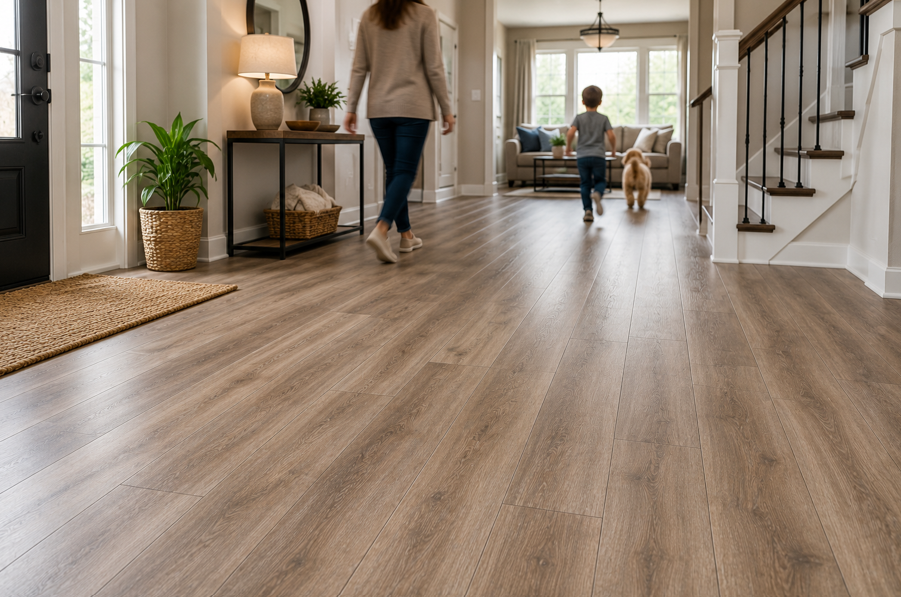
Busy homes put floors to work. Entryways collect dirt from outside, hallways carry constant foot traffic, kitchens stay active throughout the day, and family rooms often serve as gathering spaces, play areas, and walkways all at once. For homeowners in Bethlehem, PA, those high-use areas need flooring that can handle everyday activity without making the home feel purely practical.
Laminate can be a strong option because it combines a durable wear surface with a wide range of wood-look designs. The right product can give busy rooms a polished appearance while making routine cleaning and day-to-day upkeep easier to manage.
At Design Floors Lehigh Valley, homeowners can compare flooring based on where it will be installed, how much traffic the room receives, and what kind of look fits the rest of the home. That matters because not every laminate product is built for the same level of use.
If you are replacing worn flooring in a hallway, updating a family room, or planning a more consistent surface across several connected spaces, it helps to understand what makes laminate perform well in high-traffic areas and what to look for before choosing a product.
What Counts as a High-Traffic Area in a Home?
A high-traffic area is any part of the home that sees frequent movement, repeated activity, or regular contact with shoes, furniture, pets, toys, or everyday household mess.
Common examples include:
Entryways
Hallways
Kitchens
Family rooms
Living rooms
Mudrooms, when the flooring product is approved for the conditions
Open-plan spaces
Areas connecting bedrooms and shared rooms
Traffic is not only about the number of people in the home. The type of activity matters too.
A quiet hallway used by two adults may experience less wear than a family room used by children, pets, guests, and moving furniture every day. A front entry may see less foot traffic than the kitchen, but wet shoes and tracked-in grit can create a different kind of wear.
That is why homeowners need to think about how the space is used rather than simply whether it is large or small.
High-Traffic Rooms Need More Than Good Looks
Flooring in a busy area has several jobs at once. It needs to fit the design of the home, hold up to regular use, clean up easily, and work with the room's conditions.
The smartest choice is rarely the floor with the most dramatic sample. It is the one that looks right after installation and continues to make sense once everyday life begins.
For Bethlehem homeowners, entry conditions can also change with the seasons. Rain, snow, road salt, and grit can all be carried indoors at different times of year. Good cleaning habits and suitable entry mats can help reduce that wear, but the flooring itself still needs to be selected with real household use in mind.
Why Laminate Can Work Well in Busy Spaces
Laminate flooring is built in layers. While construction varies by manufacturer, the visible design typically sits below a protective wear surface and above a core that gives the plank structure.
For high-traffic areas, that wear surface is especially important because it helps resist the everyday scuffs, scratches, and surface wear that can come from repeated use.
Scratch and Scuff Resistance
Shoes, chair legs, pet claws, storage bins, and children's toys can all leave marks on a floor over time.
Laminate is often selected for busy homes because many products are designed to resist common surface wear. That does not make them scratch-proof, and durability varies from one collection to another.
A better approach is to compare products based on intended use, manufacturer specifications, wear rating, warranty terms, and the demands of the room.
Easy Routine Cleaning
High-traffic floors get dirty faster. That makes simple maintenance a practical advantage.
Loose dirt and grit can usually be removed with routine sweeping, dust mopping, or vacuuming on an appropriate hard-floor setting. Spills and marks can often be handled with a product-approved cleaner and a lightly damp method.
The main rule is to follow the care instructions for the specific laminate you choose. Excess water, abrasive cleaners, steam, and unsuitable products can cause problems for some floors.
Style Without Sacrificing Practicality
Durability does not have to mean settling for a basic look.
Laminate is available in a wide range of wood visuals, plank sizes, colors, and textures. Homeowners can choose from lighter tones that brighten a space, mid-tone finishes that feel warm and forgiving, or deeper looks that create more contrast.
That design flexibility makes laminate useful when a high-traffic area connects with several rooms. A consistent floor through a hallway, living area, and dining space can help the home feel more connected.
How to Compare Laminate Durability
Not every laminate floor is designed for the same level of traffic.
That is one of the most important points for homeowners to understand before buying.
Look at the Product's Intended Use
Manufacturers typically describe where a product is designed to be installed and what level of residential or commercial use it can handle.
A floor intended for light residential use may be suitable for a quiet bedroom but less appropriate for a busy main hallway. A product designed for heavier residential traffic may be a better fit for active shared spaces.
Some laminate products also use an abrasion class, or AC, rating. Where provided, that rating helps indicate resistance to wear. The rating is only one part of the decision, though. Moisture performance, warranty requirements, installation method, and room conditions matter too.
Think About the Whole Household
When comparing durability, consider:
Number of people in the home
Children
Pets
Frequency of guests
Shoes worn indoors
Moving chairs or furniture
Entry from outdoors
How often the room is used
Whether food and drinks are common in the area
A household with two adults has different needs from a family with several children and pets, even if both are flooring the same size family room.
Homeowners can explore available laminate flooring options with these traffic patterns in mind rather than choosing on appearance alone.
Moisture Resistance Matters in High-Use Areas
Foot traffic is not the only challenge in busy rooms.
Entries, kitchens, dining areas, and connected living spaces can also see water from shoes, spills, cleaning, pets, or everyday household activity.
Water-Resistant Does Not Always Mean Waterproof
Laminate products vary significantly in how they handle moisture.
Some modern products offer enhanced water resistance or are marketed for specific wet-use conditions. Others are better suited to dry areas.
Homeowners need to check the exact product specifications before deciding where a floor can be installed. Terms such as water-resistant and waterproof are not interchangeable, and warranty conditions may depend on how spills are handled or where the floor is used.
That distinction is especially important when a high-traffic area is also exposed to regular moisture. An active kitchen, for example, places different demands on flooring than a dry upstairs hallway.
Quick Cleanup Still Matters
Even with a moisture-resistant product, good habits help protect the floor.
In busy areas:
Wipe up spills promptly.
Keep wet shoes from sitting directly on the floor.
Use entry mats where appropriate.
Avoid leaving standing water.
Follow the manufacturer's cleaning instructions.
Address plumbing leaks or recurring moisture issues separately.
A floor can be durable and still need reasonable care.
Selecting a product suited to the room and cleaning moisture promptly gives the flooring a better opportunity to perform as intended.
The Best Laminate Styles for High-Traffic Rooms
Durability gets most of the attention, but visual choices can also affect how a busy floor looks between cleanings.
Color, pattern, texture, and variation all influence whether ordinary signs of household activity stand out.
Mid-Tone Wood Looks Can Be Forgiving
Very dark floors can make light dust, pet hair, or footprints easier to notice. Very pale floors may show certain dirt and marks more clearly.
Mid-tone wood looks can offer a useful balance for active spaces. Natural grain variation can also help minor everyday debris blend into the visual pattern until the next routine cleaning.
That does not mean homeowners need to choose a floor based on what hides dirt best. The style still needs to fit the room and personal preference.
Think about cabinetry, wall colors, trim, furniture, and adjoining floors when comparing samples.
Texture Can Add Visual Character
Embossed or textured laminate surfaces can create a more natural wood-like appearance.
Texture may also make minor surface marks less visually obvious than a very smooth, uniform finish. The effect depends on the product, color, lighting, and room.
Samples are useful because a floor can look different under showroom lighting than it does in a Bethlehem home with natural daylight, warm interior lighting, or darker furnishings.
Looking at a sample at different times of day can give you a better sense of how the color and surface will work in your home.
Think About Connected Rooms
High-traffic areas often lead directly into other spaces.
A hallway may connect the entry, bedrooms, kitchen, and living room. An open-plan family area may combine cooking, dining, and relaxing in one larger space.
Choosing a laminate style that works across those sight lines can create a more intentional look and may reduce the need for frequent flooring changes between rooms.
Visual continuity can be especially valuable in connected spaces because the floor becomes part of the overall design rather than a separate decision for every room.
Simple Habits That Help Laminate Last
Even durable flooring benefits from sensible protection.
The goal is not to treat the home like a showroom. A few habits can simply reduce avoidable wear.
Stop Grit at the Door
Small particles of dirt and grit can act like abrasives when they are walked across a floor.
Use quality mats at exterior doors and clean them regularly. If the household removes shoes indoors, create an easy place to leave them near the entrance.
During Bethlehem winters, paying attention to snow, moisture, and road salt near entrances can be especially useful. Cleaning those areas before debris travels farther into the home can help protect high-use floors.
Use Furniture Protection
Dining chairs, stools, desks, and movable furniture can create repeated contact in the same spots.
Felt pads or other floor-compatible protectors can reduce scratching and scuffing. Check them periodically because dirt can collect underneath and worn pads may stop providing effective protection.
Furniture protection is particularly useful in dining areas and home offices, where chairs repeatedly move over a relatively small section of flooring.
Lift Instead of Dragging
Heavy furniture, storage units, or appliances should not be dragged across laminate.
If something needs to move, lift it where possible or use a floor-safe moving system appropriate for the task.
This is a simple precaution, but it can prevent concentrated scratches or damage that ordinary foot traffic would be less likely to cause.
Clean Regularly, Not Aggressively
High traffic usually means more frequent cleaning, but stronger cleaning is not always better.
Removing loose dirt regularly and cleaning spills promptly is often more useful than relying on harsh products. Follow the care instructions from the manufacturer so the cleaning routine supports the finish instead of damaging it.
A consistent, simple routine is usually easier to maintain than waiting until the floor needs a major cleanup.
Why Installation Matters in High-Traffic Areas
A durable product still relies on a suitable installation.
High-use rooms can make installation issues more noticeable because the floor experiences frequent movement and repeated use.
Selecting a product with strong wear performance is only part of creating flooring that holds up well. The surface underneath it and the way the planks are installed also matter.
Subfloor Preparation Supports the Finished Floor
The subfloor needs to meet the requirements for the laminate product being installed.
Uneven areas, movement, moisture concerns, or damaged sections may need attention before the new floor goes down.
Covering an existing problem does not make it disappear. Preparing the base properly helps the finished floor sit and perform as designed.
In a high-traffic room, a stable foundation is particularly valuable because the flooring is regularly exposed to footsteps, furniture movement, and everyday household activity.
Underlayment Needs to Match the Product
Some laminate flooring requires a separate underlayment, while other products may include an attached pad.
Underlayment can play a role in sound, feel, moisture management, or installation performance depending on the flooring system.
More is not automatically better. Adding an extra layer when the product does not allow it can create problems, so the correct setup is the one specified for the flooring and subfloor.
Transitions Need Planning
Busy areas often meet other flooring materials at doorways or adjoining rooms.
Those transitions need to account for height differences, movement, door clearance, and appearance. Planning them before installation can help create a cleaner finished result.
Professional installation can also help homeowners address these details consistently across multiple connected rooms.
Where Laminate Can Make the Most Sense in a Bethlehem Home
Laminate can work well in several high-use residential spaces when the product is approved for the room's conditions.
Rather than assuming one product belongs everywhere, consider the traffic and environmental demands of each area.
Hallways
Hallways receive repeated foot traffic and often connect several rooms.
A durable laminate can create a consistent visual path through the home while keeping routine cleaning straightforward. Because hallways are highly visible from adjoining spaces, choosing a design that coordinates with nearby rooms can also improve visual flow.
Family Rooms
Family rooms may handle children, pets, guests, furniture, food, and everyday relaxation.
Laminate can offer the look of wood with practical resistance to common surface wear. Rugs can also be used to define seating or play areas while leaving the surrounding hard surface easy to maintain.
Living and Dining Areas
These spaces often need to balance appearance with regular use.
Laminate can help create a polished look while supporting an active household. In dining areas, furniture pads and routine removal of crumbs and grit can help reduce unnecessary wear.
Entry Areas
An entry can be one of the toughest areas for any floor because outdoor debris and moisture arrive there first.
Choose a laminate specifically approved for the conditions, use quality mats, and clean wet or gritty debris promptly.
If moisture exposure is frequent or substantial, compare the product's specifications carefully before deciding whether it is the right flooring for that particular entrance.
Kitchens and Other Spill-Prone Spaces
Some laminate products are designed for kitchens or other areas where occasional spills are expected.
The exact product matters. Check moisture ratings, installation requirements, and warranty conditions instead of assuming every laminate can be used in the same rooms.
For busy households, pairing the right product with prompt cleanup can make a major difference.
Is Laminate Right for Your High-Traffic Area?
Laminate can be a durable and stylish choice for busy residential areas, but the right decision depends on the room and the product.
It may be a strong fit if you want:
A wood-look floor
Resistance to common scratches and scuffs
Straightforward routine maintenance
A wide range of design options
Flooring suited to active household spaces
Long-term value within your project budget
It may be worth comparing other products if your room faces frequent standing water, unusual subfloor conditions, or needs that fall outside a particular laminate product's specifications.
The best floor is not the one with the longest list of features. It is the one whose features match the way your household uses the space.
A busy family room and a front entry may both be considered high-traffic areas, but they do not necessarily need exactly the same flooring performance. Looking at the specific demands of each space helps homeowners make a more informed choice.
Choose Laminate That Can Keep Up With Your Bethlehem Home
High-traffic rooms are where daily life happens.
Shoes cross the entry. Children move from room to room. Pets follow the family. Chairs slide in and out. Friends visit. Meals are carried through the house. Over time, those small moments add up to a lot of activity underfoot.
Laminate can be a practical choice for Bethlehem homeowners who want flooring that combines a polished wood look with durability and manageable care. The key is choosing a product intended for the level of traffic the room receives and matching its moisture performance, construction, and installation requirements to the space.
Color and texture matter, but so do the less visible details. Subfloor preparation, underlayment, transitions, cleaning methods, furniture protection, and entry habits can all affect how well the floor performs over time.
Design Floors Lehigh Valley has more than 30 years of flooring experience and helps homeowners throughout Bethlehem and the surrounding Lehigh Valley compare flooring based on their real needs. Free in-home estimates, professional installation, financing options, and knowledgeable guidance can help make the process easier from selection through installation.
If you are planning new flooring for a busy hallway, family room, living area, entry, or another high-use space, get in touch with Design Floors Lehigh Valley to discuss laminate options for your Bethlehem home.


