

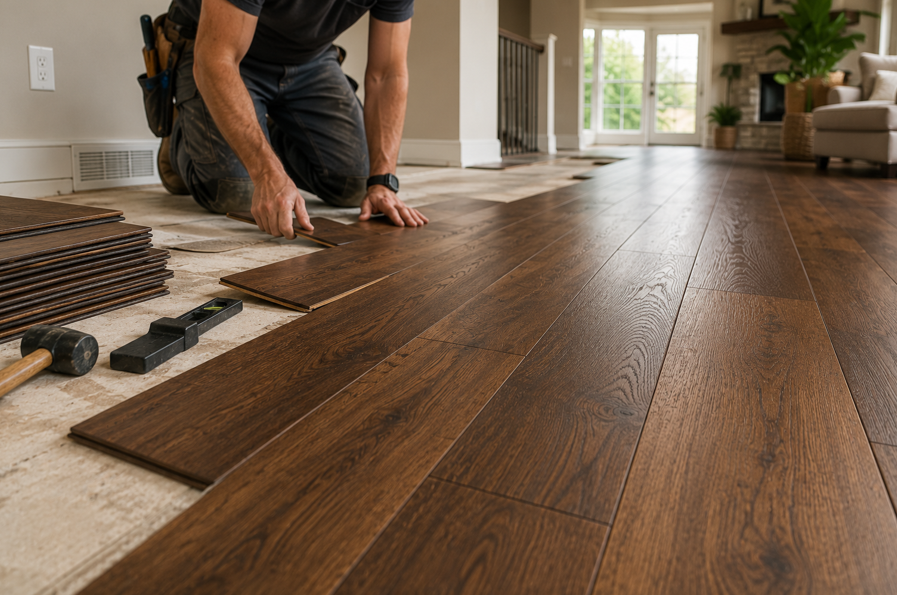
Hardwood flooring can completely change the feel of a home. It brings natural character, warmth, and a finished look that can work beautifully in living rooms, dining areas, bedrooms, hallways, and other suitable spaces. But the quality of the finished floor depends on more than choosing a wood species and stain you like.
Installation decisions matter just as much.
A floor can look perfect in a showroom and still develop problems if the subfloor is not ready, moisture conditions are ignored, the material is rushed into installation, or expansion requirements are overlooked. Small shortcuts at the beginning of the project can affect how the floor looks and performs later.
For homeowners in Nazareth, PA, understanding the most common installation mistakes can make it easier to plan the project properly and know when professional help is worthwhile. At Design Floors Lehigh Valley, homeowners can compare flooring options while considering the room, subfloor, household needs, and installation requirements before work begins.
Whether you are planning a single-room upgrade or new flooring across several areas of your home, avoiding these common mistakes can help protect your investment and create a floor you will enjoy for years.
Mistake 1: Choosing Hardwood Before Evaluating the Room
It is easy to start a flooring project by focusing on appearance.
You see a species, color, or plank style that fits your vision, and the decision feels nearly complete. In reality, the room itself needs to be part of the flooring selection process.
Room Conditions Can Influence the Right Product
Hardwood products are not identical.
Solid hardwood and engineered hardwood have different constructions, and the most suitable choice can depend on where the floor is being installed, the existing subfloor, indoor moisture conditions, and the installation method recommended for the product.
Before choosing flooring, consider:
Whether the room is above, on, or below grade
The type and condition of the subfloor
Typical humidity inside the home
Potential moisture exposure
Household traffic
Pets and children
Existing flooring transitions
Heating systems and manufacturer requirements
A beautiful floor still needs to be appropriate for the environment where it will live.
Appearance Still Matters, but It Is Only Part of the Decision
Once practical requirements are understood, homeowners can focus more confidently on design.
Wood species, grain patterns, plank width, color, texture, and finish all influence the final appearance. Natural light matters too. A sample that looks dark and dramatic under showroom lighting may appear different beside the windows in your Nazareth home.
Bringing samples into the actual space can help you see how the floor works with cabinets, trim, furniture, wall colors, and daylight before committing to the project.
The goal is to find flooring that works both visually and practically.
Mistake 2: Installing Over a Subfloor That Is Not Ready
The finished hardwood receives most of the attention because it is what everyone sees.
The surface underneath it is just as important.
A subfloor that is uneven, damaged, unstable, dirty, or affected by moisture can interfere with the installation and may contribute to problems later.
Flatness and Stability Matter
Hardwood needs a suitable base.
If the subfloor has significant high or low areas, the finished floor may not sit or perform as intended. Movement or damaged sections underneath can also affect the stability of the installation.
Preparation may involve:
Removing debris
Checking for loose or damaged areas
Correcting unsuitable uneven sections
Addressing squeaks or movement where appropriate
Confirming the subfloor meets product requirements
Evaluating moisture before installation
The exact preparation depends on the flooring, subfloor material, installation method, and manufacturer instructions.
Covering a Problem Does Not Fix It
One of the easiest mistakes to make is assuming new hardwood will hide an issue underneath.
It may hide the subfloor visually, but that does not mean the problem disappears.
If there is an underlying moisture issue, unstable material, or significant unevenness, it is better to understand and address it before the hardwood is installed.
Subfloor preparation may not be the most exciting part of a flooring renovation, but it provides the foundation for everything that follows.
Mistake 3: Ignoring Moisture and Indoor Humidity
Wood is a natural material, and it responds to its environment.
Changes in moisture can cause wood to expand or contract. Some seasonal movement can be normal, but unsuitable conditions before or after installation can create larger concerns.
For homes in Nazareth, where indoor conditions can change between heating and cooling seasons, moisture planning deserves attention.
Check Conditions Before Installation
Flooring professionals may evaluate moisture levels in the hardwood, subfloor, or both depending on the product and project.
This information helps determine whether conditions are appropriate for installation.
Simply opening flooring boxes and beginning immediately is not a substitute for evaluating the environment.
Look Beyond the Flooring Itself
Moisture problems can come from many places.
Potential concerns may include:
Damp subfloor conditions
Plumbing leaks
Moisture entering from below
Recent wet construction work
Significant indoor humidity changes
Water intrusion around doors or exterior walls
Hardwood flooring is not designed to solve an existing moisture problem.
If moisture conditions appear unusual, identifying the source before installation can protect the new floor and the surrounding home.
Think About Conditions After Installation Too
The environment does not stop affecting wood when the installers leave.
Maintaining reasonable indoor conditions can support better long-term performance. Product manufacturers may provide recommendations for relative humidity or room conditions, so homeowners need to understand the care guidance for the particular flooring they select.
Mistake 4: Rushing the Flooring Into Installation
Scheduling a flooring project can be exciting. Once the material arrives, homeowners naturally want to see it installed.
Moving too quickly can be a mistake.
Some hardwood products need time in the installation environment before the project begins, depending on the flooring, packaging, manufacturer instructions, site conditions, and installation method.
Acclimation Is Not One Universal Rule
You may hear advice such as, “Leave the wood in the house for a few days.”
That is too general.
The correct approach depends on the product. Some manufacturers provide specific acclimation requirements, while others focus on confirming suitable moisture conditions rather than following a fixed number of days.
That is why manufacturer instructions matter more than a rule picked up from a friend, social media post, or previous renovation.
The Home Needs to Be Ready Too
Acclimation is not useful if the building itself is still experiencing unusual conditions.
Ideally, the installation environment needs to reflect normal living conditions. If major wet work, painting, or other construction activity is still affecting indoor moisture, the project may need additional planning.
Professional installers can evaluate the flooring and site together rather than treating acclimation as a simple countdown.
Mistake 5: Forgetting That Wood Needs Room to Move
Hardwood changes slightly as environmental conditions change.
That movement needs to be considered during installation.
One common installation mistake is placing flooring too tightly against walls, fixed objects, or other areas where the product requires space.
Expansion Requirements Are Part of the Installation System
Manufacturers typically provide installation specifications for perimeter spacing and other details.
Those requirements can vary based on the flooring and installation method.
The finished floor may later be covered neatly at the perimeter by baseboards or trim, but the underlying installation still needs to allow the flooring to perform as designed.
Skipping those requirements because the gap is not visually attractive before trim is installed can create unnecessary risk.
Transitions Need Planning as Well
Hardwood may meet tile, carpet, laminate, luxury vinyl, or another flooring material at doorways and adjoining rooms.
Those areas need a clean transition that considers:
Height differences
Flooring movement
Door clearance
Visual appearance
Manufacturer requirements
Planning transitions before installation can produce a much more polished result than trying to solve every connection after the flooring is already in place.
Mistake 6: Treating Every Hardwood Installation Method the Same
Not every hardwood floor is installed in exactly the same way.
Depending on the flooring product and project, installation methods may include nail-down, staple-down, glue-down, or floating systems.
The appropriate method depends on factors such as flooring construction, subfloor type, location, and manufacturer specifications.
The Product Determines the Rules
A homeowner may have experience with one hardwood project and assume the next installation will work the same way.
That can be risky.
Different products can have different requirements for:
Fasteners
Adhesives
Underlayment
Subfloor preparation
Expansion spacing
Moisture testing
Installation pattern
Room conditions
The installation instructions supplied for the specific product are the key reference.
Homeowners comparing species, colors, constructions, and installation options can explore available hardwood flooring with the conditions in their home in mind.
Avoid Choosing a Method for Convenience Alone
An installation method should not be selected simply because it seems quicker or more familiar.
The system needs to suit both the flooring and the space.
A knowledgeable flooring professional can help determine which method fits the product, subfloor, and room while staying within manufacturer requirements.
Mistake 7: Starting Without Planning the Layout
Hardwood installation is not only about securing one plank after another.
The layout influences how the entire room looks when the work is complete.
Think About What the Eye Will Notice
Before installation begins, consider:
The direction of the planks
Major sight lines
Hallways and adjoining rooms
Doorways
Cabinets or fixed features
Room shape
Where narrower cuts may appear
A little planning can help avoid awkward-looking rows or unexpected visual changes near the opposite side of the room.
Mix Boards for a More Natural Appearance
Real wood contains natural variation.
Boards can differ in grain, tone, and character even when they come from the same flooring collection.
Installing directly from one package at a time can sometimes create noticeable concentrations of similar boards. Depending on the product and manufacturer guidance, working from multiple cartons can help distribute natural variation more evenly.
The goal is not to make every plank look identical. The variation is part of what makes hardwood attractive.
Mistake 8: Using the Wrong Tools or Installation Materials
A hardwood project involves more than the visible planks.
Fasteners, adhesives, underlayment, moisture-control products, trims, and installation tools may all play a role depending on the system.
Using materials that are not compatible with the flooring can affect performance.
“Close Enough” Is Not a Good Installation Standard
An adhesive designed for one flooring system may not suit another.
The same applies to underlayment, fastener type, equipment settings, and other installation details.
Product specifications exist for a reason.
If a manufacturer requires a particular installation material or method, replacing it with whatever happens to be available can introduce avoidable problems.
Professional Equipment Can Improve Consistency
Experienced flooring installers use tools designed to help maintain consistent placement, fastening, cutting, and fitting.
The value is not only speed. Correct equipment paired with experience can help create cleaner transitions, precise cuts, and a more consistent finished appearance.
For a homeowner, purchasing unfamiliar tools and learning to use them during an expensive flooring project may not always be the best place to experiment.
Mistake 9: Assuming DIY Installation Is Always the Better Value
Some homeowners enjoy renovation work and have the skills needed for flooring projects.
Others choose DIY because they expect it to reduce the overall cost.
The decision deserves a realistic assessment.
Consider the Entire Project, Not Only Labor Cost
DIY hardwood installation may involve:
Removing existing flooring
Preparing the subfloor
Testing or evaluating moisture
Moving furniture
Planning the layout
Cutting planks
Managing doorways and transitions
Installing trim
Handling unexpected site conditions
Purchasing or renting tools
A mistake can also lead to wasted material or rework.
That does not mean homeowners cannot install hardwood themselves. It means the savings need to be weighed against skill level, time, equipment, product requirements, and the consequences of installation errors.
Warranty Requirements Matter
Before beginning a DIY installation, review the flooring warranty and installation instructions.
Some warranties may depend on following specific procedures, approved methods, or documented site conditions.
Understanding those requirements before work starts is much easier than discovering them after a problem develops.
Mistake 10: Treating Installation Day as the End of the Project
The floor is installed. The room looks different. The project feels finished.
But protecting the floor from the start can make a meaningful difference.
Follow Post-Installation Guidance
Depending on the flooring and installation method, there may be recommendations regarding:
When furniture can return
When rugs can be placed
Cleaning products
Adhesive cure time
Indoor environmental conditions
Follow the instructions associated with the actual flooring system rather than assuming every hardwood floor has the same post-installation routine.
Protect the Floor From Everyday Wear
Once the room returns to normal use, a few practical habits can help maintain the finish:
Use protective pads under furniture.
Keep entry areas clean.
Remove grit regularly.
Clean spills promptly.
Use cleaning products designed for the floor.
Avoid dragging heavy furniture.
Follow manufacturer care recommendations.
Hardwood is meant to be lived on. Good care simply helps it continue looking its best.
A Better Hardwood Installation Starts Before the First Plank Goes Down
The biggest installation mistakes often happen before homeowners see much progress.
Choosing flooring without considering room conditions, skipping subfloor preparation, ignoring moisture, rushing acclimation, overlooking expansion requirements, and starting without a layout plan can all affect the final result.
A successful installation begins with preparation.
For Nazareth homeowners, that means thinking about the whole flooring system rather than only the surface. The right hardwood needs the right setting, installation method, preparation, and ongoing care.
Professional experience can be particularly helpful when the project involves subfloor repairs, unusual room layouts, moisture concerns, transitions between several flooring types, or multiple connected rooms.
Design Floors Lehigh Valley has more than 30 years of flooring experience and provides free in-home estimates, professional installation, and guidance for homeowners throughout Nazareth and the surrounding Lehigh Valley. Working with an experienced team can help homeowners choose flooring that fits their home and address installation details before they become problems.
If you are planning new hardwood flooring in your Nazareth home and want guidance on product selection, preparation, or professional installation, get in touch with Design Floors Lehigh Valley to discuss your project.


