

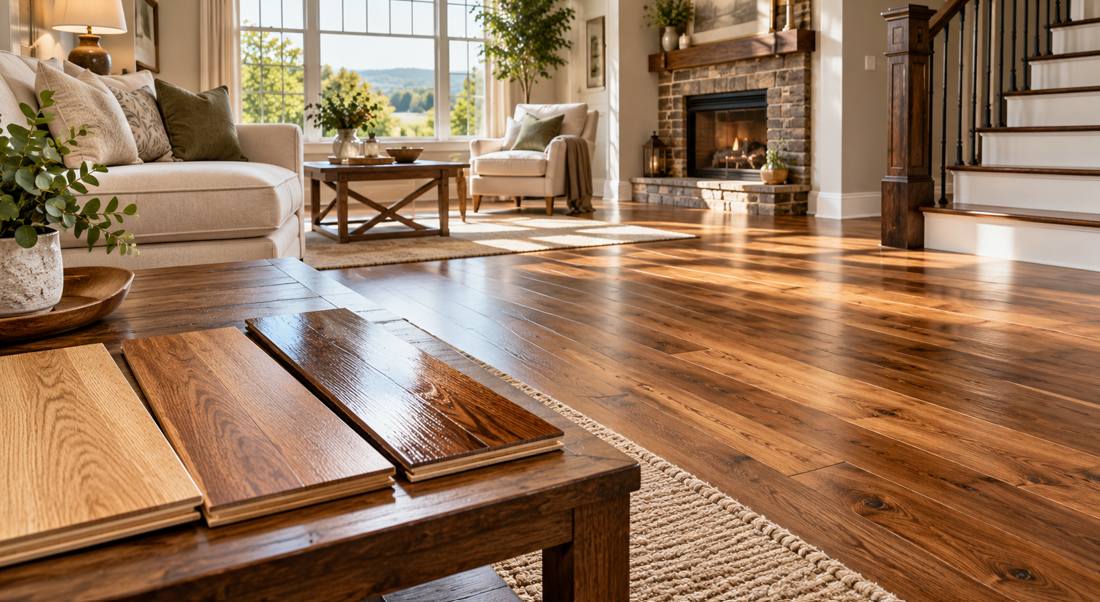
Choosing hardwood for a home is about more than selecting the species, plank width, or stain color. The finish placed over the wood has a major influence on how the floor looks, how it feels underfoot, and how well it handles everyday life.
That matters in Easton, where homes range from historic properties full of architectural character to renovated spaces with clean, contemporary interiors. A finish that works beautifully in one home may feel completely different in another.
The right choice comes down to balancing appearance, durability, maintenance preferences, and the way each room is used.
Homeowners exploring new floors can turn to Design Floors Lehigh Valley for knowledgeable local guidance, a wide range of flooring options, and professional installation backed by more than 30 years of experience.
This guide explains the most common hardwood finish types, sheen levels, lifestyle considerations, and local factors worth thinking about before making a final decision.
What Does a Hardwood Floor Finish Actually Do?
A hardwood floor finish creates a protective layer over the surface of the wood. While color and style naturally get most of the attention, the finish plays an equally important role in long-term performance.
It can influence:
Resistance to everyday wear
How easily marks are noticed
How light reflects across the floor
The richness of the wood grain
Cleaning and maintenance routines
How the flooring fits the overall interior design
A finish does not make hardwood completely resistant to scratches, moisture, or wear. Hardwood is still a natural material. However, the right finish can help protect the surface and support better long-term performance.
Finish and Stain Are Different
It is easy to confuse stain and finish because both affect the appearance of hardwood.
A stain changes or enhances the color of the wood.
A finish sits over or penetrates the wood to provide protection while affecting sheen, texture, and overall appearance.
For example, the same oak flooring can look dramatically different depending on whether it has a natural stain with a matte finish or a deeper stain with a semi-gloss finish.
Understanding this difference makes it easier to create a flooring combination that feels intentional rather than relying on color alone.
Site-Finished and Prefinished Hardwood
Homeowners may also come across site-finished and prefinished hardwood.
Prefinished hardwood is finished during manufacturing before it arrives at the property. These floors typically offer a very consistent appearance and factory-controlled coating.
Site-finished hardwood is installed first and then sanded, stained, and finished inside the home. This approach can offer more flexibility when selecting stain colors and sheen levels.
Neither option is automatically right for every project. The best fit depends on the flooring, room design, installation goals, and desired appearance.
Common Hardwood Floor Finish Types
Several finish systems are available for hardwood floors, and each has its own visual character and performance qualities.
Knowing the differences can make the selection process much easier.
Water-Based Polyurethane
Water-based polyurethane is a popular option for homeowners who want the natural tone of their hardwood to remain prominent.
It generally creates a clear finish with less amber coloring than traditional oil-based alternatives.
Benefits can include:
A clean, natural appearance
Relatively fast drying
Multiple sheen options
Good durability for residential spaces
Less color change over time compared with some traditional finishes
This can be especially appealing for lighter woods or homes with a bright, modern interior where homeowners want the flooring to feel fresh and understated.
Water-based finishes are also available in matte, satin, and higher-sheen options, giving homeowners flexibility in the final appearance.
Oil-Based Polyurethane
Oil-based polyurethane is known for producing a warmer, richer tone.
It can deepen the natural color of the wood and develop an amber appearance that many homeowners associate with traditional hardwood flooring.
Its benefits often include:
A warm, classic appearance
Strong surface protection
Rich color development
Good performance in active households
Because of the additional warmth it adds, this finish can work particularly well with medium or darker wood tones.
Drying and curing times may be longer than with water-based systems, so planning the installation schedule carefully can help create a smoother experience.
Hard-Wax Oil
Hard-wax oil is often chosen by homeowners who prefer a more natural look and texture.
Instead of creating a thicker surface coating, this type of finish penetrates the wood and leaves the grain feeling more visible.
It is commonly associated with:
Matte or low-sheen finishes
Natural wood texture
A softer visual appearance
Localized maintenance possibilities with some systems
A contemporary, handcrafted feel
Hard-wax oil may require a different maintenance routine from polyurethane, so homeowners may want to consider how much ongoing care fits their lifestyle.
For homes where the natural character of the wood is a major design feature, it can create a distinctive result.
Other Professional Finish Systems
Flooring professionals may also recommend specialized finish systems depending on the hardwood, property conditions, traffic levels, and desired performance.
The chemistry behind these coatings can become technical quickly, but homeowners generally do not need to become finish experts.
The more useful question is whether the finish suits the wood, room, and household.
Those still exploring styles can browse available hardwood flooring options and consider how different species, tones, and grains may look under each finish.
Matte, Satin, Semi-Gloss, or Gloss: Which Sheen Is Right?
The sheen level determines how much light reflects from the finished surface.
This choice can dramatically change the character of a room, even when the wood and stain remain exactly the same.
Matte Finish
Matte finishes have very little shine and create a natural, relaxed appearance.
They have become popular in contemporary interiors because they allow the grain and color of the wood to take center stage.
Matte surfaces may also make everyday dust, footprints, and small surface marks less noticeable than highly reflective finishes.
They work well in:
Busy family rooms
Contemporary spaces
Natural or rustic interiors
Homes with pets
Areas where a more understated look is preferred
Matte does not mean completely flat or dull. A quality matte finish can still make hardwood feel refined and elegant.
Satin Finish
Satin offers a subtle level of reflection without creating an overly polished look.
It is often considered one of the most versatile sheen levels because it can fit traditional, transitional, and modern interiors.
Satin may suit homeowners who want:
Some light reflection
A polished appearance without high shine
Practical everyday maintenance
A finish that works across multiple rooms
For homeowners who feel uncertain between matte and semi-gloss, satin often provides a balanced middle ground.
Semi-Gloss Finish
Semi-gloss provides more noticeable shine and can make hardwood feel more formal.
It reflects more light across the surface, which can help highlight the wood grain and make a room feel polished.
This sheen may work particularly well in:
Formal dining rooms
Traditional interiors
Lower-traffic living spaces
Homes where hardwood is intended to make a visual statement
The trade-off is that greater reflection can make dust, footprints, and minor surface marks easier to notice.
Gloss Finish
Gloss creates the strongest reflection and the most dramatic appearance.
It can produce a sleek, high-end look when carefully maintained, particularly in formal spaces.
However, glossy floors can reveal everyday marks more quickly than lower-sheen alternatives.
Homeowners considering gloss may want to think about how frequently the room is used and how much regular cleaning fits their routine.
A Quick Way to Compare Sheen Levels
A simple approach is:
Choose matte for natural and understated.
Choose satin for versatile and balanced.
Choose semi-gloss for polished and noticeable.
Choose gloss for maximum shine.
There is no universal winner. The best sheen is the one that matches both the interior design and the way the room is used.
Match the Finish to Everyday Life
A hardwood sample can look beautiful in a showroom, but the real test comes after it becomes part of daily life.
Think about how each room functions before choosing the finish.
Homes With Children
Family homes often see frequent foot traffic, toys, occasional spills, and regular cleaning.
A durable finish with a lower sheen may help everyday marks blend more naturally into the surface.
Matte and satin finishes can be particularly appealing because they keep the floor looking refined without highlighting every footprint.
Homes With Pets
Pets can introduce claw marks, tracked-in dirt, and frequent movement across the same areas.
No finish can make hardwood completely scratch-proof, but the right combination of finish, sheen, cleaning habits, and floor protection can help maintain its appearance.
Keeping pet nails trimmed, using entry mats, and cleaning abrasive debris regularly can also make a meaningful difference.
High-Traffic Areas
Entryways, hallways, kitchens, and family rooms typically see more activity than formal spaces.
In these areas, durability and maintenance may deserve more weight than dramatic shine.
A practical finish paired with a matte or satin sheen can often create a polished appearance while making daily upkeep more manageable.
Lower-Traffic Rooms
Dining rooms, sitting rooms, guest rooms, and other spaces with lighter use may offer more freedom to select finishes based primarily on appearance.
Homeowners who enjoy higher sheen levels may prefer using them in these rooms where everyday wear is less concentrated.
How Easton’s Seasonal Changes Affect Hardwood Floors
Easton experiences changing temperatures and humidity throughout the year, and natural hardwood responds to those environmental shifts.
Wood naturally absorbs and releases moisture depending on indoor conditions.
During more humid periods, boards may expand slightly. During dry winter months, they may contract.
A finish helps protect the surface, but it does not prevent natural wood movement entirely.
Winter Heating and Dry Indoor Air
Heating systems can reduce indoor humidity during colder months.
When indoor air becomes very dry, hardwood may lose moisture.
Maintaining reasonably stable indoor conditions can help support the floor through seasonal changes.
Homeowners can also follow the flooring manufacturer's recommended humidity range where available.
Summer Humidity
Warmer months can bring higher indoor moisture levels.
Air conditioning and humidity control can help maintain more consistent conditions.
The goal is not to create a perfectly unchanging environment. Rather, keeping extreme swings under control can help hardwood perform more predictably.
Rain, Snow, and Entryways
Wet weather introduces another consideration.
Moisture, mud, grit, and road residue can be carried indoors on shoes and pets, especially around entrances.
A few habits can help protect finished hardwood:
Place quality mats near exterior doors.
Wipe moisture promptly.
Sweep or vacuum abrasive grit regularly.
Use cleaners approved for the specific hardwood finish.
Avoid allowing wet footwear to sit directly on the floor.
A well-chosen finish works best when paired with consistent everyday care.
Match the Finish to the Wood and Interior Style
A finish should complement the entire room, not compete with it.
The same sheen can look completely different depending on the wood species, stain color, wall color, cabinetry, and lighting.
Light Hardwood
Lighter woods can work beautifully with clear water-based finishes and matte or satin sheens.
This combination can help maintain an airy, natural appearance and works particularly well in bright contemporary spaces.
Medium and Warm Wood Tones
Medium-toned woods often benefit from finishes that enhance their natural depth.
A satin or semi-gloss surface can add richness without overpowering the grain.
Warmer finishes can also complement traditional cabinetry and architectural details.
Dark Hardwood
Dark floors can create striking contrast and a luxurious atmosphere.
However, darker surfaces may make dust and footprints more noticeable, particularly when paired with high-gloss finishes.
A lower sheen can preserve the dramatic color while making daily maintenance feel more manageable.
Traditional Interiors
Easton has many homes where classic architectural features play an important role in the overall design.
Warm hardwood tones, visible grain, and satin or semi-gloss finishes can complement traditional trim, cabinetry, and furnishings beautifully.
Modern and Transitional Spaces
Modern interiors often favor cleaner lines, wider planks, natural colors, and lower sheen.
Matte and satin finishes can help hardwood feel contemporary without losing its warmth.
Transitional homes can combine elements from both approaches, allowing homeowners to pair classic wood species with a more current finish.
Questions to Ask Before Choosing a Finish
When several options look appealing, a short decision checklist can make the process easier.
Consider asking:
How much daily foot traffic does the room receive?
Are children or pets regularly using the space?
Is a natural or polished appearance preferred?
How visible can footprints and dust be before they become distracting?
Would a warmer amber tone or clearer finish suit the room better?
How much routine maintenance fits the household?
Does the floor need to coordinate with existing cabinetry or trim?
Is the floor being newly installed or refinished?
How does the finish look under the room's actual lighting?
What cleaning products does the finish manufacturer recommend?
Samples can be especially helpful.
A finish viewed under showroom lights may look different once it is placed near a sunny window or under warm interior lighting.
Whenever possible, compare samples in the actual space at different times of day.
The ideal choice is rarely based on one factor. It comes from combining style, practicality, and long-term expectations.
Create a Hardwood Floor That Fits the Home
Choosing the right finish is about finding the balance between beauty and everyday performance.
For Easton homeowners, that means considering the type of finish, preferred sheen, household activity, wood species, stain color, maintenance expectations, and local seasonal conditions.
A matte water-based finish may be ideal for one household, while a warm satin or semi-gloss finish may better suit another.
There is no single answer for every home.
What matters is selecting a finish that supports the way the space is actually used while creating the look the homeowner wants to enjoy for years.
With more than 30 years of flooring experience, Design Floors Lehigh Valley helps homeowners compare materials, finishes, installation options, and design choices with knowledgeable local support.
For personalized guidance on selecting a hardwood style and finish for an Easton home, get in touch with the Design Floors Lehigh Valley team.


